What Alki's Seawall Erosion Means for Buyers and Sellers on the Water
October 1, 2026
October 1, 2026
As West Seattle Blog reported, in April 2026, Seattle Parks crews started walking the length of the seawall that runs along Alki Beach toward the Don Armeni boat ramp, marking each spot where the ground had started to give way underneath it. They found about 20 holes of varying sizes. The city's response was bright orange signage, since the fencing and markers used in past years kept getting removed or ignored. A Parks spokesperson told West Seattle Blog: "The erosion under the seawall occurs in random spots, creating suction that pulls soil out and forms these holes." Crews planned to fill the entire stretch before Memorial Day.
The story began after a reader asked about the signs, and it read as a routine neighborhood update. For anyone with money on the line along the Alki shoreline, it carries more weight than that. The seawall in question belongs to the city, but the erosion mechanism underneath it does not respect property lines. The same suction that hollowed out those 20 spots along public ground works the same way under a private bulkhead two lots down. The condition of that structure, and whether a seller can document it, is one factor to consider when evaluating a waterfront property on Alki Avenue.
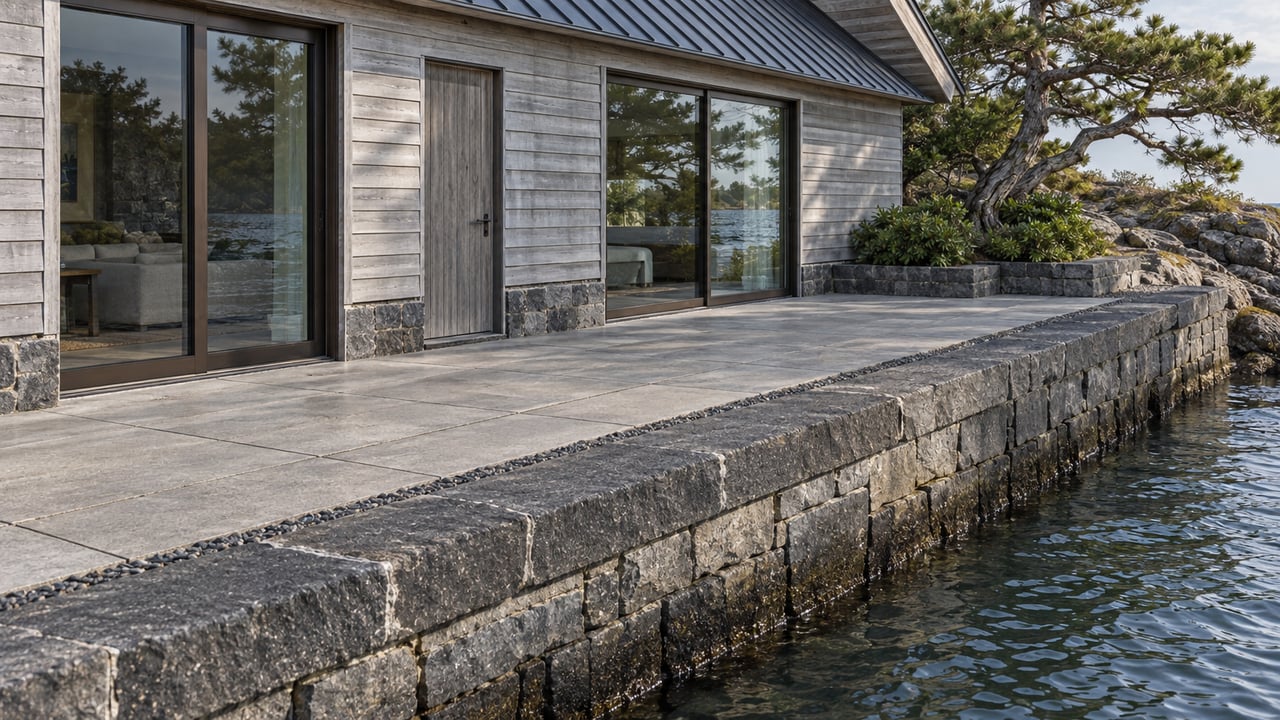
Alki's beach is mostly a city park, and a concrete seawall has separated that park from the road and the buildings above it for decades. Public radio coverage of Puget Sound shoreline armoring has used Alki specifically as an example of how thoroughly this stretch of coast has been walled off, contrasting it with a rare unarmored patch of beach that still supports natural shoreline habitat. The point of that reporting was ecological, but it doubles as a plain description of what buyers are actually looking at when they tour a home along Alki Avenue or Beach Drive: a shoreline that has been hardened, piece by piece, for most of the last century.
Seawalls and bulkheads do the job they are built for, holding soil and structures in place against wave action, but they come with a well documented tradeoff. The same wave energy that would otherwise spread out across a natural beach gets reflected back at the base of the wall, a process coastal engineers call toe scour. Over years, that scouring can undermine the structure from below, which is the same phenomenon Seattle Parks described in April. It is not a one-time event tied to a single storm. It is a maintenance condition that shows up on a schedule dictated by tides and time, not by whoever happens to own the property that year.
Washington sellers are required to fill out a Seller Disclosure Statement, commonly called Form 17, under RCW 64.06.020. The form asks direct questions about known drainage problems, slope instability, and prior geotechnical issues. The disclosure also makes timing important if something in it changes a buyer's mind.
An important consideration for waterfront buyers is the standard the form actually holds sellers to. Washington law only requires disclosure of what the seller actually knows, not what a competent inspection would have found. A seller who bought the home ten years ago, never had the bulkhead surveyed, and never noticed a problem can honestly check "don't know" on every relevant line, even if the wall in front of their house has the same suction erosion happening under Seattle Parks' section a few blocks away. A clean Form 17 on a waterfront property reflects what the seller knew when signing it. It does not replace a geotechnical or structural look at the bulkhead, and a buyer who wants that answer needs to commission it.
Standard homeowners insurance in Washington does not cover flood damage, and it does not cover earth movement, which includes the kind of erosion and land shifting that shows up around bulkheads and seawalls. The state's Office of the Insurance Commissioner is direct about the gap: homeowner insurance usually doesn't cover damage from land movement or landslides caused by rain, snowmelt, flooding, or earthquakes. Structure coverage for that risk comes through a separate product, a Difference in Conditions policy, typically written by a surplus lines insurer rather than a standard carrier.
Buyers may wish to ask about this before financing is underway or an inspection contingency is waived. For a property with an aging or undocumented bulkhead, insurance availability and cost may become clearer during underwriting than at a showing. Asking about existing coverage, or the lack of it, before writing an offer moves that conversation to a point where it can still affect price or terms.
These considerations are part of evaluating a property within a price spread that is already wider than most buyers expect. Current listings along Alki Avenue earlier this year ranged from around $675,000 for a compact waterfront condo to more than $6.3 million for a large front-row unit with several thousand square feet and direct beach exposure. Across Alki Point specifically, view homes were listing at a median price near $1.05 million in May 2026, typically selling in about 34 days and drawing roughly two offers each.
That is a wide band for homes that all get described the same way in marketing copy, as waterfront or water view. Square footage and finish level explain part of the gap. What explains the rest is exposure: how directly the structure sits against Puget Sound, how much of the price is buying unobstructed shoreline versus a stacked unit set back from the water, and whether the bulkhead or seawall protecting that exposure has ever been inspected, permitted, or repaired. Two homes at the same price point can have very different levels of exposure, so buyers can include the bulkhead or seawall in their due diligence.
A few questions turn this from an abstract concern into something concrete during a transaction:
These are routine due-diligence questions, much like those a buyer would ask about a roof or foundation, applied to a structure at the edge of the water.
Seattle Parks framed its April fill-and-monitor plan as a season-by-season effort, filling holes as they appear rather than solving the problem once. That is a realistic way to manage a public seawall, and it is also a fair description of what any private bulkhead along this stretch of shoreline needs. The erosion mechanism does not go away because a property changes hands. It becomes part of the new owner's maintenance schedule.
If you are evaluating a home along Alki Avenue, Beach Drive, or anywhere else where the shoreline itself is part of the value, The City Team can walk through what a bulkhead's permit history, insurance status, and disclosure actually tell you before you write an offer.
This article is general information, not legal, tax or financial advice. Consult a qualified professional about your situation.
Stay up to date on the latest real estate trends.
We pride ourselves on providing personalized solutions that bring our clients closer to their dream properties and enhance their long-term wealth. Contact us today to discuss all your real estate needs!
The City Team
Beth Britt
(206) 854-4589
[email protected]
Jonn Mcynturff
(206) 227-2772
[email protected]
4445 California Ave SW Seattle WA 98116