Lincoln Park Way SW Ferry Terminal Traffic: What May Change
September 10, 2026
September 10, 2026
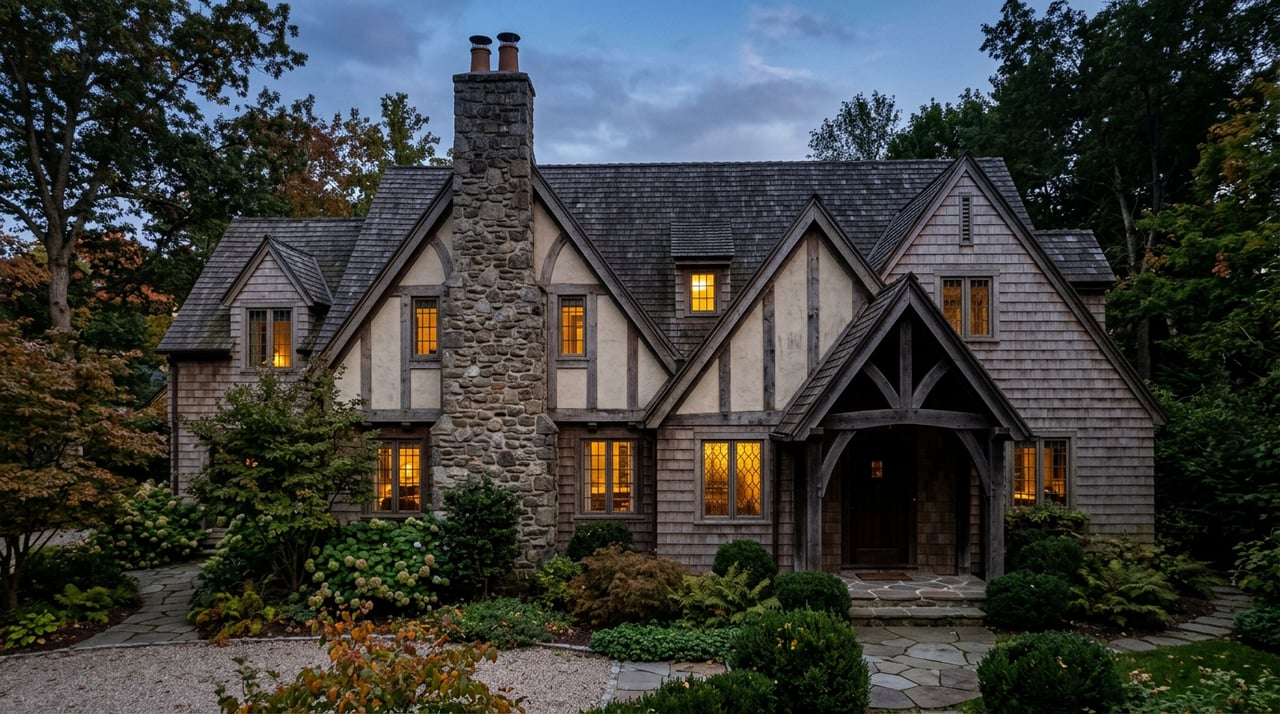
A listing two blocks off Fauntleroy Way SW reads like every other West Seattle listing this time of year: filtered light through mature cedars, a peekaboo water view, walking distance to Lincoln Park. The nearby ferry queue is another factor buyers may want to consider. On a busy sailing, cars headed for the Fauntleroy ferry dock back up along the shoulder of Fauntleroy Way SW, sometimes far enough that the tail end sits blocks from the terminal itself. Anyone who has shown a house on this stretch has stood in a driveway watching that line inch forward.
For years the story buyers told themselves about this corridor was simple: yes, there's a line, but it's temporary, it's seasonal, and it's the price of living a five-minute walk from a 135-acre park and a dock to Vashon Island. That story is no longer complete. Washington State Ferries has spent five years and a federally reviewed planning process deciding how to rebuild the Fauntleroy terminal, and the plan that came out of it changes the shape of the problem rather than removing it.
The terminal serving the Fauntleroy-Vashon-Southworth route was built in the 1950s and is one of the oldest docks in the state ferry system. It's also the only Washington State Ferries terminal not served by a state route or major arterial. It runs instead on Fauntleroy Way SW, a city-classified minor arterial that also happens to be a residential street lined with driveways, crosswalks, and the entrance to Lincoln Park.
In March 2026, the Federal Highway Administration approved the final Planning and Environmental Linkages study for the terminal's replacement, closing out a five-year review process. The concept that emerged from that process doesn't just replace the aging dock. It roughly doubles what the dock can hold.
"Holding between 124 and 155 vehicles on the dock, compared to 80 vehicles today."
That's how Washington State Ferries has described the new design's vehicle capacity versus what the current terminal holds, as KIRO 7 reported. The logic is straightforward from an operations standpoint: more room on the dock means fewer cars idling on the shoulder of Fauntleroy Way SW waiting for a boat. But more capacity on the dock also means more vehicles routed through the same residential streets to get there. A bigger holding area doesn't reduce the total number of cars converging on this corner of West Seattle. It changes where those cars sit while they wait.
The project unfolds in stages that matter differently depending on whether you're buying now, in two years, or after the new terminal opens.
| Milestone | Timing |
|---|---|
| New signal installed at the Fauntleroy Way SW and terminal intersection | Starting fall 2026 |
| Project enters formal environmental review (NEPA/SEPA) | Later in 2026 |
| Construction begins | 2028 |
| New terminal opens | Around 2031 |
The signal going in this fall is the first physical change most residents will notice, replacing the officers who currently direct traffic by hand during busy sailings with a fixed light at the dock entrance. It's a small fix aimed at a problem that predates the larger rebuild. The bigger disruption doesn't start until 2028, when construction on the trestle and terminal itself begins, and it runs for roughly three years before the rebuilt dock opens.
That's a five-year window, from this fall's signal through a 2031 opening, during which the traffic pattern around Lincoln Park Way SW is not settled. Anyone treating "close to the ferry" as a fixed, known quantity right now is pricing a corridor that's mid-transition, not the corridor that exists after 2031.
The change most likely to be felt by residents living just off the dock isn't the construction itself. It's a decision that's already been made about how traffic will flow once the signal goes in.
Washington State Ferries has settled on a permanent, 24/7 restriction on left turns onto the dock from northbound Fauntleroy Way SW, the movement used by drivers coming from westbound Barton. During the project's Community Advisory Group briefing last fall, a group member asked how drivers coming downhill are supposed to reach the dock if they can't make that turn, and project staff confirmed those drivers will need to find a different route or loop back north instead. In the community discussion that followed, neighbors raised the concern that some of that rerouted traffic would land on nearby residential streets, including 45th Ave SW, which doesn't carry ferry traffic today.
This is a street-grid issue, not a feature of any one house. A buyer comparing a home directly on Fauntleroy Way SW against one a block over on a quieter residential street is comparing a street that loses some queue traffic to a signal against a street that may absorb new cut-through traffic it didn't carry before. That context can help buyers compare one block with another.
The scale of this capacity increase is worth pausing on, because it breaks a pattern that has held for decades. The Fauntleroy Community Association has a documented history of opposing exactly this kind of expansion. The state sought funding to add loading capacity in 1979 and again in 1991. Both times, elected officials from the city and county pushed back, and in 1997 the Seattle City Council passed a resolution stating there should be no dock expansion and that ferry traffic through Fauntleroy should be reduced, not increased. The county executive raised the same objection again in 2009.
For close to forty years, proposals to increase dock capacity faced opposition. The current plan calls for a terminal built to hold nearly double today's capacity. The terminal is seismically vulnerable and doesn't meet current storm and tsunami design standards, and the new design raises the facility's elevation to prepare for future sea level rise. The project combines safety upgrades with greater vehicle capacity.
None of this means the area around Lincoln Park and the Fauntleroy dock stops being desirable. The park itself isn't changing, the water access isn't changing, and a seismically sound, properly elevated terminal is a genuine long-term improvement over a dock built in the 1950s that current engineering standards would not approve today. What's changing is the assumption that "near the ferry" is one uniform condition.
Between now and 2031, the streets closest to the terminal are living through a construction project, not a finished amenity. A house on Fauntleroy Way SW itself will feel the fall 2026 signal change almost immediately and will sit closest to construction activity starting in 2028. A house a block or two back, on Lincoln Park Way SW or the streets feeding toward 45th Ave SW, trades some of that direct exposure for a different kind of friction: diverted turn traffic that didn't exist before the no-left-turn policy takes effect.
The practical move for a buyer weighing this corridor is to ask which category a specific block falls into, not to treat "near Lincoln Park" as a single answer. A seller marketing a home here has the same opportunity in reverse: being able to speak plainly about where a property sits relative to the terminal's timeline can help address questions during inspection and negotiation.
Will Fauntleroy Way SW close during construction? The project scope covers the dock, trestle, and the city right of way connecting to it, and construction is scheduled for 2028 through around 2031. Specific closure plans for that phase haven't been finalized as of this year's environmental review stage, so anyone buying now should expect more detail as the project moves through NEPA and SEPA review later in 2026 and into 2027.
Does the new signal this fall change anything for daily commuters right away? Yes, in a limited way. The signal replaces the officer-directed traffic control at the dock entrance and is installed independently of the larger rebuild, so it's the first visible change tied to this project, well ahead of the 2028 construction start.
Could this plan still change before construction starts? The core capacity concept, 124 to 155 vehicles versus today's 80, has cleared federal environmental linkages review, which is a significant procedural milestone. The project still has to complete formal NEPA and SEPA review before construction, so details around design and traffic management could be refined, but the fundamental capacity increase is the version Washington State Ferries is carrying forward.
Understanding a corridor like this, block by block and phase by phase, is the kind of groundwork that shapes both a smart purchase and a well-prepared listing. If you're weighing a home near Lincoln Park, or getting a property in this part of West Seattle ready to sell before or during this project's next phase, The City Team can walk you through what a specific block is actually positioned for. Schedule a consultation to talk through the details before you write an offer or set a list price.
Stay up to date on the latest real estate trends.
We pride ourselves on providing personalized solutions that bring our clients closer to their dream properties and enhance their long-term wealth. Contact us today to discuss all your real estate needs!
The City Team
Beth Britt
(206) 854-4589
[email protected]
Jonn Mcynturff
(206) 227-2772
[email protected]
4445 California Ave SW Seattle WA 98116