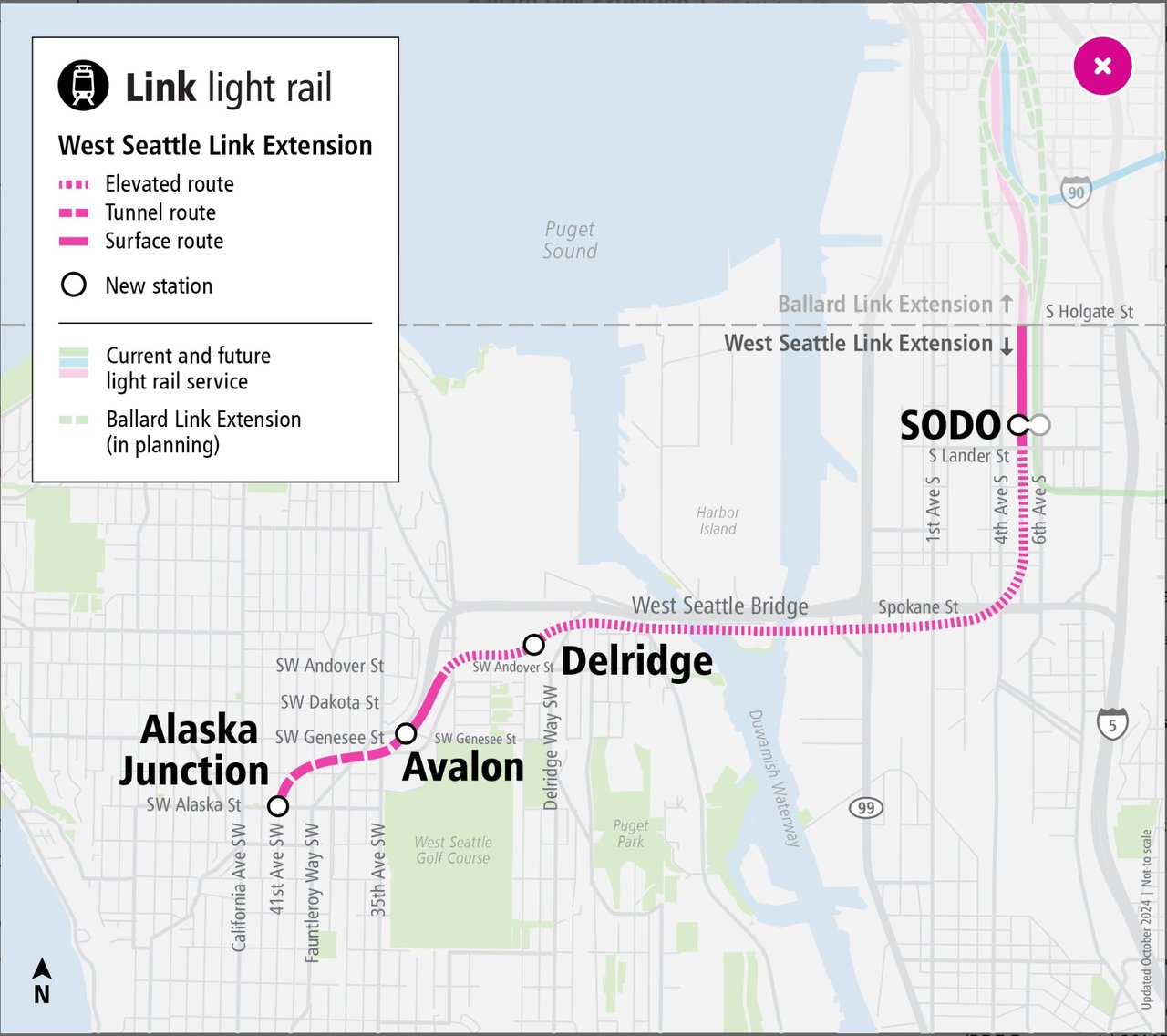
This is the part many West Seattle homeowners have heard about, and the short answer is: yes, Avalon has been under serious review as a cost-saving measure. In March 2026, Sound Transit staff presented cost-saving options that specifically included dropping the Avalon station in order to reduce the project budget, simplify the route, reduce some property impacts, and avoid certain effects near Longfellow Creek and surrounding properties.
That is why there has been confusion. The official project map many people still find online shows Avalon, because it reflects the earlier selected project. But the more recent affordability work and board actions moved the West Seattle project ahead minus the Avalon station as part of the currently affordable/funded version of the plan.
So, for homeowners trying to understand the current status, the best way to say it is this: Avalon was part of the original West Seattle light rail plan, but recent cost-saving decisions have positioned the project to move forward without Avalon in the funded version now advancing.
Why West Seattle is still likely to benefit
Even with the Avalon station issue, light rail still has the potential to be a major long-term benefit for West Seattle. The biggest upside is simple: a more reliable, direct transit connection between West Seattle and the rest of the city and region. That matters in a part of Seattle where bridge access, traffic, and travel time reliability have always shaped daily life.
Light rail also tends to make neighborhoods with strong walkability and good station access more attractive to future buyers. In other Seattle neighborhoods, buyers have shown a clear preference for areas where transit, neighborhood business districts, and daily convenience come together. While every neighborhood is different, it is reasonable to think West Seattle could see some of the same buyer interest over time, especially around the Alaska Junction and other areas with strong transit connections.
For the broader community, future light rail could also support:
Better access to downtown jobs, events, and medical centers.
More support for local businesses near station areas because of increased foot traffic.
Improved bus, bike, and pedestrian connections as station-area planning moves forward.
A stronger long-term case for car-light or one-car households in parts of West Seattle.
What this could mean for home values
This is the question we hear most often. The honest answer is that light rail does not raise every nearby home’s value equally, but it can change buyer demand in meaningful ways over time. Homes in areas with easy, comfortable access to a station often become more attractive to buyers who want better mobility and less reliance on driving.
In our conversations, some buyers are already asking which neighborhoods may benefit most from future light rail. We have seen similar patterns in other parts of Seattle, including areas like Roosevelt and Ravenna, where transit access became a stronger part of the value story once stations became real and usable. That is not a guarantee of the same outcome here, but it is a useful reference point when thinking about long-term demand.
At the same time, some buyers have the opposite reaction if a home is too close to elevated rail. Concerns about noise, privacy, views, or the feel of being right next to infrastructure can affect how people perceive value. That means there may be a “sweet spot” for some properties: close enough to benefit from convenience, but not directly adjacent to the line or station structures.
Which West Seattle neighborhoods may benefit the most
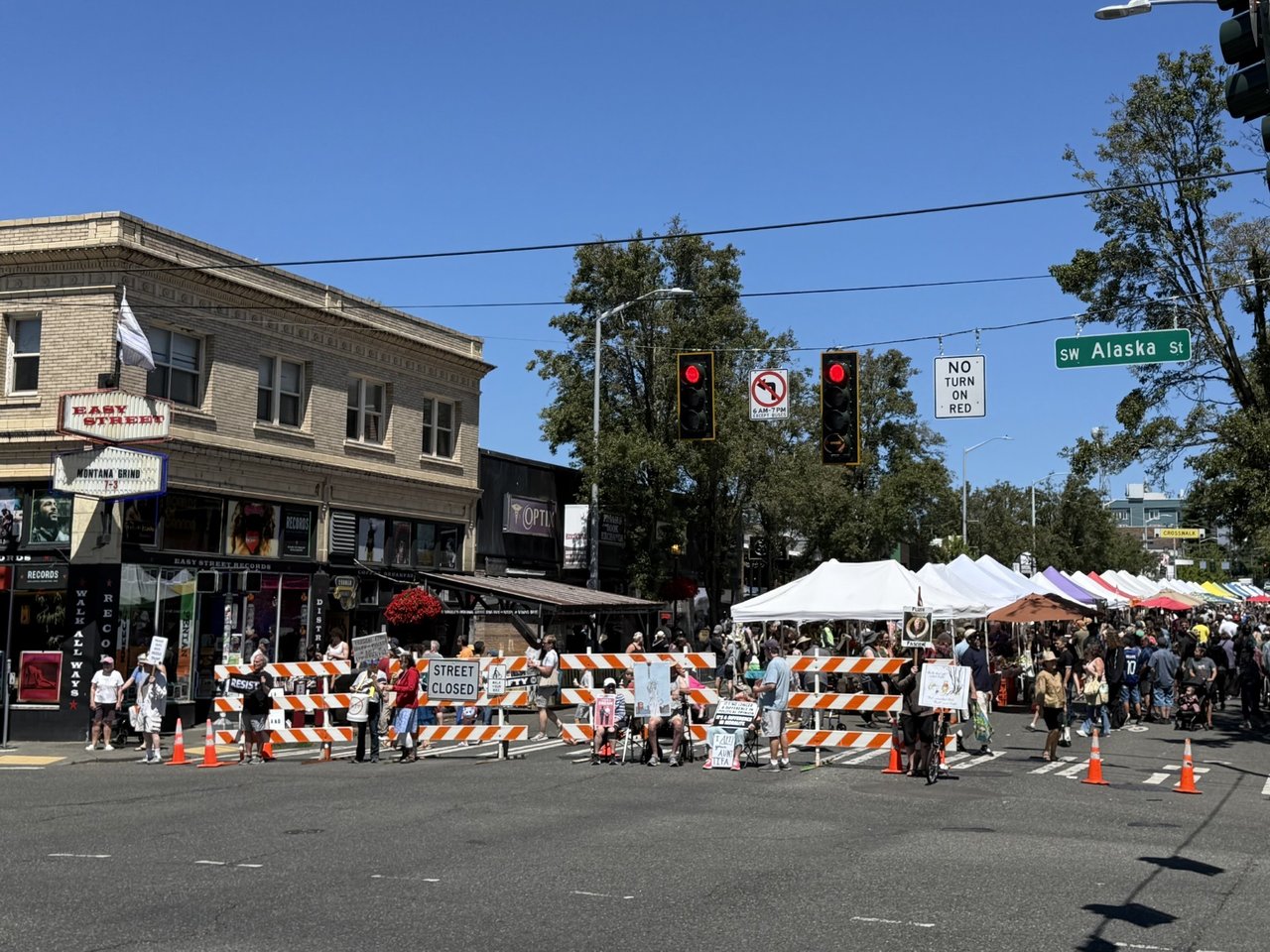
The Alaska Junction is likely to remain the biggest focal point for real estate conversations around light rail. A future station in or near the Junction would strengthen one of West Seattle’s most walkable, established neighborhood centers, which is exactly the kind of environment many buyers already value.
Delridge is also important. A station there could improve access for a wide stretch of West Seattle and make surrounding areas more appealing to buyers who want practical transit connections without needing to live directly in the Junction core.
Even without Avalon in the funded plan, nearby neighborhoods may still feel some benefit depending on how bus routes, walking connections, and station access are ultimately designed. In other words, the value story may extend beyond homes right next to a station and into neighborhoods that are simply better connected because of the project.
Construction, disruption, and property concerns
It is also important to be realistic. Major transit projects bring disruption before they bring convenience. Homeowners near the alignment may experience years of planning activity, utility work, traffic changes, road closures, noise, and construction staging. Some properties may also be directly affected by acquisitions or easements needed for the project.
This is one reason the Avalon discussion matters. Sound Transit has said one advantage of removing Avalon would be fewer property impacts and lower construction complexity in that part of West Seattle. For some owners, that could reduce the risk of direct project effects even if it also means losing a nearby future station.
So from a homeowner perspective, light rail is not just about whether the project is “good” or “bad.” It is about where your home sits relative to the final alignment, how close you are to future stations, and whether your property is more likely to benefit from access or feel the downside of construction and infrastructure.
Timeline: what to expect now
The timeline is still a moving target. Older project materials pointed to early-2030s service, and some public materials have referenced 2032, but Sound Transit’s broader financial shortfall has already forced the agency to rethink pacing, scope, and affordability across the ST3 system.
The key point for homeowners is that West Seattle light rail is still moving forward, but the exact delivery timing may continue to evolve. From a real estate standpoint, that means future light rail is already part of how some buyers think about West Seattle, even if the final opening date remains uncertain.
Our perspective as West Seattle residents and Realtors
As West Seattle residents and Realtors, we see both sides of this conversation. We absolutely see the long-term upside of finally connecting West Seattle into the regional light rail system, and we also understand why some homeowners worry about being too close to elevated infrastructure or living through years of construction.
We are already hearing from buyers who ask which neighborhoods may benefit most from future light rail, and from owners who wonder whether now is the right time to sell, hold, or improve their property before more of the project takes shape. Those are exactly the kinds of questions worth talking through now, before the market starts reacting more sharply to future station-area changes.
West Seattle Light Rail FAQ
Is the Avalon station still happening? The original selected project map included Avalon, and that is why many people still see it shown online. But in 2026, Sound Transit identified dropping Avalon as a major cost-saving move, and the more recent affordable/funded version advancing for West Seattle moves ahead without Avalon as part of the project currently being prioritized.
Will West Seattle light rail help home values? It could help demand in certain areas, especially neighborhoods with strong walkability and good access to future stations. That said, not every home benefits the same way, and properties directly next to elevated structures may be viewed differently by buyers than homes a few blocks away.
Which neighborhood may benefit the most? The Alaska Junction is likely to be the most closely watched area because it combines neighborhood walkability, local businesses, and a future station location. Delridge may also become more appealing to buyers who value practical access into the broader transit system.
Could being too close to light rail hurt value? For some buyers, yes. Noise, privacy, view impacts, and the feel of living next to major infrastructure can be concerns, especially with elevated segments. That is why location relative to the alignment matters so much, and why one home may benefit while another just a block away could be viewed differently.
Should homeowners do anything now? Yes, stay informed and think strategically. If your home is near the future line or station areas, it makes sense to understand the latest maps, likely access patterns, and what buyers may care about over the next several years.
Want to talk about what this means for your home?
Every West Seattle property will interact with future light rail a little differently. Some owners may benefit from stronger long-term buyer demand near station areas, while others may want to think carefully about timing, direct project impacts, or how the final alignment could shape resale value.
If you would like help understanding what the latest West Seattle light rail plan may mean for your property, reach out to Beth Britt & Jonn McYnturff. We are happy to talk through the current maps, the latest project changes, and how your home search or home sale strategy may fit into West Seattle’s next chapter.
The City Team | Home Search
The City Team | Home Search